
FICTION BOOK REVIEW: “The Bible”
Joe Greathead
Joe Greathead is a book reviewer, development editor (and occasional classical harpist). He has covered fiction and non-fiction for The New Yorker, Vanity Fair and Vice (amongst others).
After recently concentrating my literary appetite upon the darkly realistic, Booker-Prize-winning Flesh by David Szaley, I thought I owed it to myself to dip my toes back into something less literary and more commercial for a change. Following the effusive recommendation of a dear friend, I have decided to read a book that has had quite strong international sales for actually quite a long time, apparently – an anthology-type text full of all sorts of different fantastical stories, ranging from the whimsical to the downright macabre. There are volumes of information similar in tone and content to a modern self-help book (but with some honestly quite startlingly off-kilter recommendations, such as removing the tip of a babies’ penis – gosh!). About halfway through, it reverts to the story of a young man from Galilee with a typical rags to riches story arc (though I won’t spoil the ending – suffice to say there’s a twist, and you won’t be ‘cross’).
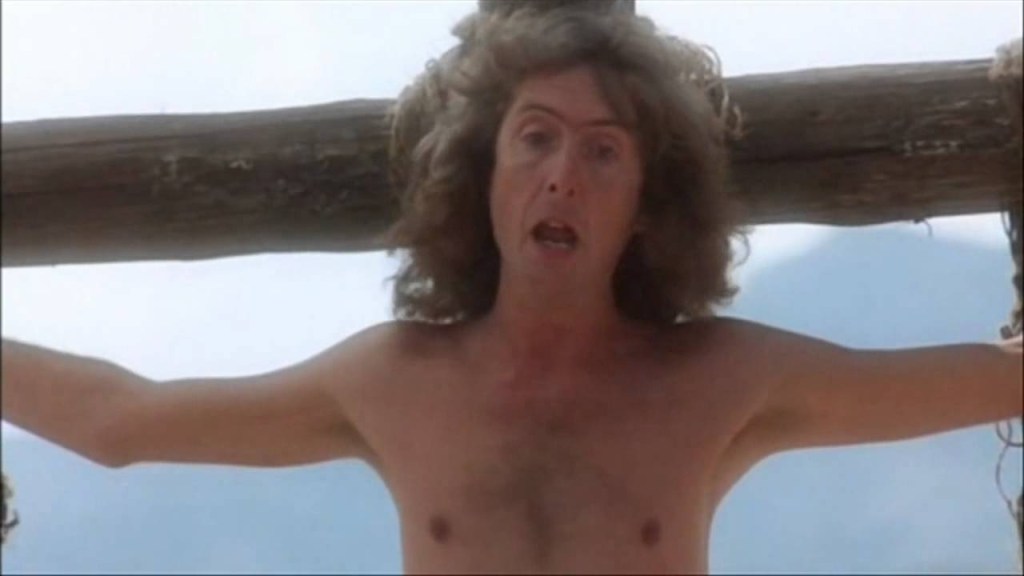
Pictured: ‘Jesus Christ’ – the key protagonist of the second part of this book
As a work of fiction, it functions mainly as a work of magical realism; often in the naive style. Often it also veers into the realm of classic fantasy. Large portions have been written in a very basic cadence – almost childlike – and whether this is a conscious creative choice or indicative of the authors’ writing ability is anyone’s guess. In parts – I’m somewhat reminded of The Wind in the Willows; and I wonder if any of the authors had indeed read the works of J.M Barrie. Possum Magic is another story in which I recognise some similarity. Though I’m not – I’ll admit – very informed of when this book was written or indeed where (you’ll have to excuse my lack of research – I’m on a rather sharp deadline). But overall I would rate the linguistic and thematic complexity as considerably more basic than a typical Young Adult fiction novel (though some of the more gory moments might keep the more sheltered twelve year-old up at night).
Though simple as it may be – frustratingly that doesn’t seem to guarantee readability. I must admit, at multiple junctures while reading this tome, I was ready to throw the book in the slush pile. Finding out – after reading two of the ‘gospels’ – that they all tell slightly different versions of the same story – was frustrating to say the least. Stylistically to have multiple narrators of the same events is arguably an interesting and somewhat innovative choice; however there was very limited new information introduced with each retelling. It was – a little exhausting – to tell you the truth. The text could vastly benefit from a judicious editing, taking to heart Stephen King’s essential piece of writing advice – to ‘kill your darlings.’ Which means – if it doesn’t serve the plot – it shouldn’t stay on the page (even if you love the way the words sound – or you think it’s particularly clever – sometimes especially so).
Interestingly – The Bible has – I’m told – about 40 registered authors – so structurally, the book resembles somewhat of a short story collection. But that is only for the first half of the book. The second half then tells the story of a young man; a carpenter by trade, who somehow acquires magical powers, forms a rag-tag group of pals, travels throughout the Middle-Eastern world helping people – culminating in a rather tense stand-off with a public official (and then I really mustn’t spoil the ending – but it’s a doozy).
So – to brass tacks. I think – and I might be unpopular for this opinion – but you can probably find something better for your summer beach read. There are a few nail-biting moments (and not to mention a savage twist at the end) – but f0r me (and I like to think I speak for a somewhat considerable fraction of the reading community), I think if I was going for magical realism in my fiction, I’d be going for a Márquez, a Borges, or even a Salman Rushdie or Murakami. It’s a no for me.
Rating: two stars out of five
 Joe Greathead